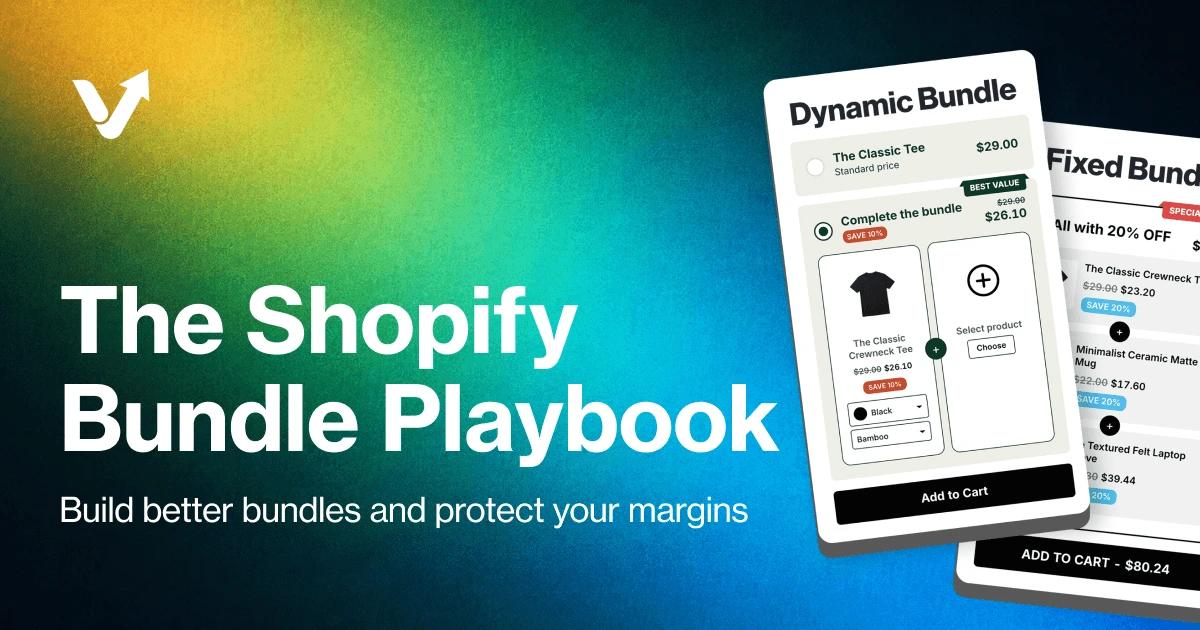
Product bundling has evolved from a simple discount tactic to a sophisticated revenue optimization strategy. In our experience working with bundle-driven Shopify stores, well-designed bundles typically lift average order value (AOV) by 30-50%, often within the first month or two.
This comprehensive guide will walk you through everything you need to know to create, optimize, and scale your first product bundle, without any coding knowledge required.
What Are Product Bundles? (And Why They Matter in 2026)
Product bundles are curated collections of complementary products sold together, typically at a price lower than purchasing each item individually. But they're much more than just discounts. They're a psychological pricing strategy that transforms the shopping experience.
The Psychology Behind Bundling Success
When customers see a bundle, three powerful psychological triggers activate:
- Perceived Value - Even a 10% discount creates the feeling of "winning"
- Decision Simplification - One choice instead of multiple reduces cognitive load
- Loss Aversion - Fear of missing out on savings drives action
These triggers compound: a well-built bundle makes the shopper feel smart while removing the effort of choosing, which is why bundles convert in situations where a plain discount would not.
Types of Product Bundles: Choose Your Strategy
1. Fixed Bundles (Pre-Curated Collections)
Best For: New customers, gift shoppers, first-time bundle implementations
Pre-selected products sold as a complete package with no customization.
Example:
- "Complete Skincare Routine" = Cleanser + Toner + Moisturizer + Serum
- Individual total: $128
- Bundle price: $99 (save $29)
Fixed bundles are the most common starting point because they are the simplest to merchandise, and they suit gift buyers who want a ready-made choice instead of assembling one themselves.
2. Mix & Match Bundles (Build Your Own)
Best For: Repeat customers, variety seekers, personalization-focused brands
Customers select X number of products from a curated collection.
Example:
- "Build Your 3-Pack": Choose any 3 candles from our collection
- Individual: $25 each = $75 total
- Bundle: $65 (save $10)
Mix and match works hardest with repeat customers: they already know your catalog, so choosing their own combination feels like a perk rather than a chore.
3. Quantity Breaks
Best For: Consumables, wholesale, gift-friendly items, subscription products
Tiered discounts that reward buying more units of the same product. (Volume discounts extend the same tiered mechanism to multi-packs, case pricing, and bulk orders.)
Example:
- 1 protein powder: $49
- 2 protein powders: $45 each (8% off)
- 3+ protein powders: $39 each (20% off)
Quantity breaks hit hardest on consumables, where buying ahead is natural; in our experience they are often the single biggest AOV lever a store has.
4. Cross-Sell Bundles (Frequently Bought Together)
Best For: Complementary products, accessories, complete solutions
Products that naturally pair together based on usage patterns.
Example:
- Camera + SD Card + Carrying Case
- Laptop + Mouse + Laptop Sleeve + USB Hub
Cross-sell offers convert best when they appear at the moment the main product is already in the cart; shown too early, the same offer just adds noise to the buying decision.
Why Product Bundles Outperform Traditional Discounting
The Same Discount Works Harder Inside a Bundle
A flat 15% storewide discount cuts margin on every single order and quietly tells shoppers your list prices are negotiable. The same 15% inside a bundle behaves differently: the shopper has to add more items to earn it, so the discount is funded by a larger basket instead of coming straight out of margin. Perception shifts too. A storewide sale reads as "this brand is struggling"; a bundle reads as "this brand put together a smart deal."
The effect is well documented outside e-commerce too. In a Harvard Business School study of the handheld video game market, offering gaming hardware and games as a bundle alongside the individual products lifted hardware sales by roughly 100,000 units and game sales by over a million. Notably, when the same products were sold only as bundles, revenue dropped by more than 20 percent. The lesson: bundles work best as an option next to your regular products, not as a replacement for them.
Key Benefits of Bundling
- Higher AOV. Customers naturally spend more when the better deal requires a bigger basket.
- Inventory movement. Pairing best-sellers with slower items clears stock without a clearance sale.
- Lower effective marketing cost. Every acquired visitor generates more revenue.
- A better shopping experience. A curated bundle answers "what goes with this?" before the customer asks.
- Loyalty. Customers remember genuinely good value and come back for it.
How to Create Your First High-Converting Bundle (Step-by-Step)
Step 1: Analyze Your Product Data
Before creating any bundle, review:
Sales Analytics:
- Top 20% selling products (your anchors)
- Bottom 30% selling products (bundle candidates)
- Frequently bought together combinations
- Average cart size and common quantities
Customer Behavior:
- Browse patterns (what products are viewed together)
- Cart abandonment data
- Customer reviews mentioning combinations
- Support tickets asking about pairing products
Pro Tip: Use Shopify Analytics → Reports → Products to identify your best candidates.
Step 2: Choose Products That Make Sense Together
High-performing bundles share these characteristics:
Natural complementarity. Shampoo and conditioner belong together; shampoo and socks do not. If you cannot explain in one sentence why the products share a bundle, customers will not work it out for you.
A single target customer. Everything in the bundle should serve the same person, need, and quality expectation. A luxury serum bundled with a bargain-bin sponge confuses the price perception of both.
A strategic margin mix. Include one or two high-margin items, balance them with popular lower-margin products, and check that the bundle as a whole stays profitable.
Visible value. The savings need to be meaningful ($10 or more, not $2) and instantly understandable. The discount sweet spot for most products is 12-20%.
Step 3: Calculate Your Bundle Pricing (The Formula)
The V Bundles Pricing Formula:
Total Individual Prices: $A
Target Customer Savings: 15-20%
Your Cost of Goods: $B (sum of all items)
Shipping/Processing: $C

Minimum Bundle Price: B + C + (10% profit margin)
Maximum Bundle Price: A × 0.85
Optimal Bundle Price: Somewhere in the middle
Real Example:
- Product A: $30 (cost: $12)
- Product B: $25 (cost: $10)
- Product C: $20 (cost: $8)
Total retail: $75
Total cost: $30
Shipping: $5
- Minimum viable: $38.50 (break-even with 10% margin)
- Maximum: $63.75 (15% customer discount)
- Optimal: $59.99 (20% off, healthy margin, psychological pricing)
Step 4: Create Compelling Bundle Copy That Converts
Your bundle needs three copy elements:
1. Value-Driven Name
A name like "3-Product Bundle" or "Bundle Deal #2" describes the mechanics; a name like "Complete Morning Routine Bundle" or "The Ultimate Home Office Setup" describes the outcome the customer is buying.
2. Benefit-Focused Description
Template:
[Problem this solves] + [What's included] + [Outcome they'll achieve] + [Social proof]
Example:
"Everything you need for glowing skin in one convenient package. Get our bestselling cleanser, vitamin C serum, and night cream used by 10,000+ customers. Wake up with visibly brighter, smoother skin, guaranteed."
3. Clear Savings Communication
Show both:
- Dollar amount: "Save $25"
- Percentage: "(Save 25%)"
- Unit economics: "That's like getting the serum FREE"
Step 5: Design Your Bundle Presentation
Visual Hierarchy:
- Eye-catching badge - "BEST VALUE" or "SAVE 25%"
- Product images - Show all items clearly
- Crossed-out comparison -
$75$59.99 - Trust elements - Reviews, ratings, purchase count
- Urgency/Scarcity - "127 sold this week" or "Limited time"
Mobile Optimization (Critical in 2026):
- Most shopping now happens on mobile: 78% of global e-commerce traffic and 70% of orders come from mobile devices
- Stack images vertically
- Large, tappable "Add Bundle to Cart" buttons
- Swipeable product previews
- One-tap checkout integration
Step 6: Set Up Analytics Tracking
From day one, track:
Performance Metrics:
- Bundle conversion rate (target: 8-15%)
- Bundle revenue as % of total revenue
- Average items per bundle purchase
- Bundle vs. individual product conversion
Customer Metrics:
- Customer acquisition cost (CAC) for bundle buyers
- Lifetime value (LTV) of bundle customers
- Repeat purchase rate
- Net Promoter Score (NPS)
Optimization Metrics:
- Most/least popular bundle combinations
- Cart abandonment rate for bundles
- Mobile vs. desktop performance
- Bundle variation testing results
Best Practices for Bundle Success in 2026
1. Start with Your Winners
Don't bundle your worst products together hoping they'll sell. Include at least one bestseller in every bundle, use popular products to introduce new or slower items, and run your first tests with your top 10 products before experimenting further down the catalog.
2. Limit Options (The Paradox of Choice)
Psychology: More than 4-5 bundle options paralyzes customers. The classic evidence is Sheena Iyengar's famous jam study: a display of 24 jams attracted more browsers than a display of 6, but only 3% of them bought anything, versus roughly 30% at the smaller display. Later research shows the effect bites hardest when options are similar and hard to compare, which is exactly what a wall of overlapping bundles looks like.
Recommended Structure:
- 2-3 pre-made bundles per product category
- 1 "build your own" option maximum
- Clear "most popular" designation
3. Use Social Proof Aggressively
High-Converting Elements:
- Star ratings with review counts ("4.9/5 from 847 customers")
- Recent purchase activity ("238 purchased in the last 7 days")
- Recommendation rates ("94% would recommend this bundle")
- Photo reviews from real customers
4. Create Urgency (But Be Authentic)
Ethical Urgency Tactics:
- Real inventory counts: "Only 8 bundles left at this price"
- Time-based promotions: "Bundle sale ends Sunday"
- Seasonal relevance: "Perfect for Valentine's Day"
- Limited edition: "Holiday bundle available until March 15"
Avoid fake countdown timers, false scarcity, and manipulative tactics. Shoppers recognize them, and the short-term lift is not worth the trust you burn.
5. Optimize for Mobile-First Shopping
2026 Mobile Bundle Standards:
- Thumb-friendly tap targets (minimum 44×44px)
- Sticky "Add to Cart" button that follows scroll
- Progressive disclosure (expand for details)
- Apple Pay / Google Pay one-tap checkout
- Fast-loading images (<100KB per product)
6. A/B Test Everything
Testing Priority Order:
Week 1: Bundle discount amount (15% vs 20% vs 25%)
Week 2: Bundle composition (3 items vs 4 items)
Week 3: Visual presentation (grid vs list vs carousel)
Week 4: Copy/messaging (savings-focused vs value-focused)
Week 5: Price point testing ($59.99 vs $64.99 vs $54.99)
Minimum test duration: 2 weeks or 100 bundle purchases (whichever comes first)
Common Mistakes to Avoid (Learn from Others' Failures)
Mistake #1: Discounting Too Deeply
The Problem: 40% bundle discounts destroy margins and devalue products
The Solution:
- Sweet spot: 12-20% discount
- Anything above 25% needs approval from finance team
- Calculate profit per bundle, not just per item
Counterintuitively, tightening an over-deep discount often improves results: perceived value barely moves while margin recovers immediately. If your bundles currently run at 35% off, test 18-20% before assuming customers will walk away.
The deeper risk is training. When J.C. Penney abruptly ended constant discounting, Wharton researchers observed that shoppers had become "addicted to high/low pricing" and no longer knew what a fair price was without a discount to anchor on. Deep, constant bundle discounts teach your customers the same habit.
Mistake #2: Bundling Unrelated Products
The Problem: Random products bundled together confuse and frustrate customers
Picture a "Surprise Bundle" of a yoga mat, coffee beans, and a phone case. No shopper has that combination of needs at the same moment, so the offer reads as inventory clearance dressed up as a deal, and it converts accordingly.
The Fix:
- Ensure thematic consistency
- Products should serve the same use case/occasion/customer
- When in doubt, survey customers first
Mistake #3: Making Bundles Too Complex
A bundle should feel like one decision, not five. You have crossed the line when you see these warning signs:
- More than 6 items in a bundle
- Customers need to answer 5+ questions to configure
- Checkout process takes longer than regular products
- Mobile users can't easily see all products
Simplification Checklist:
- Can you explain the bundle in one sentence?
- Is the value immediately obvious?
- Can customers checkout in 3 taps or less?
- Does it load in under 2 seconds?
Mistake #4: Poor Bundle Visibility
The best-designed bundle earns nothing if shoppers never see it. The usual failures:
- Bundle buried on page 3 of shop
- No home page feature or banner
- Missing from category pages
- Zero email/social promotion
Visibility Strategy:
- Feature bundles on homepage hero section
- Dedicated "Bundles" collection page
- Cross-promote on individual product pages
- Email campaigns specifically for bundles
- Social media posts showcasing bundle value
- Retargeting ads for cart abandoners
Mistake #5: Set-It-and-Forget-It Mentality
Bundles decay. Seasons change, costs shift, and a once-fresh offer becomes wallpaper shoppers scroll past. Build a monthly maintenance habit:
- Review sales performance by bundle
- Update seasonal bundles (swap winter items for spring)
- Refresh copy/images to prevent ad blindness
- Test new combinations based on data
- Adjust pricing based on cost changes
- Survey customers on bundle satisfaction
Advanced Bundle Strategies for Growth
Strategy 1: Subscription Bundles
Combine bundling with recurring revenue:
Example: "Coffee Lover's Monthly Bundle"
- 3 bags of coffee (rotating selection)
- Delivered monthly
- 15% off individual price
- Additional 10% off subscription
Subscription bundles compound: every subscriber locks in months of repeat revenue, so their lifetime value dwarfs that of one-off buyers even after the deeper discount.
Strategy 2: Tiered Bundles (Good-Better-Best)
Create three bundle options at different price points:
Example: Skincare Bundles
Starter ($39):
- Cleanser + Moisturizer
- Great for beginners
Complete ($79): MOST POPULAR
- Cleanser + Toner + Moisturizer + Serum
- Complete routine
Premium ($129):
- Everything in Complete + Eye Cream + Night Cream + Face Mask Set
- Ultimate anti-aging system
Most shoppers land on the middle option; pricing researchers call this the compromise effect, first documented by Itamar Simonson in 1989. The starter tier makes the middle look complete, and the premium tier makes it look reasonably priced. One honest caveat from Simonson's later research: the pull toward the middle weakens when shoppers arrive armed with reviews and comparison research, so treat your tier structure as something to test rather than a guaranteed lever.
Strategy 3: Dynamic Bundles
AI-powered bundles that personalize based on:
- Browsing history
- Past purchases
- Cart contents
- Customer segment
- Seasonal trends
Tech Required: Shopify Plus with personalization app or custom development
Done well, personalized bundles meaningfully outperform static ones, but they need real order volume to learn from; most stores should master static bundles first.
Strategy 4: Gift Bundles with Custom Packaging
Premium Positioning:
- Pre-wrapped with custom tissue/box
- Include personalized note card
- Gift-ready presentation
- 15-20% premium pricing justified
Target Occasions:
- Mother's Day
- Valentine's Day
- Holiday season
- Graduation
- Weddings
Gift-ready presentation justifies a 15-20% price premium over the same products sold plainly, and that premium flows almost entirely to margin.
What a Working Bundle Strategy Looks Like: Three Scenarios
The scenarios below are illustrative composites based on patterns we repeatedly see across bundle-driven stores. They are not audited case studies, so treat them as blueprints for how each strategy plays out rather than promised outcomes.
Scenario 1: Indie Skincare Brand With Slow Inventory
A small skincare brand sits on inventory that turns over too slowly. It builds three curated bundles ("Daily Routine," "Night Recovery," and a travel-size trio) at an 18% discount, features them on the homepage, and announces them to the existing email list and Instagram followers.
The typical pattern: bundles quickly become a meaningful share of orders because they answer the "what do I actually need?" question new skincare customers always have. AOV climbs as single-product orders convert to routine orders, and the slower products finally move because they ride along with the bestsellers.
Scenario 2: Fitness Apparel With Seasonal Stock
An apparel store struggles with end-of-season inventory. It builds a "Gym Starter Pack" (top, bottoms, accessories), rotates the contents every quarter, and offers gender-specific versions.
The typical pattern: starter packs appeal most to new customers, who prefer a complete outfit over assembling one. Because the pack's contents rotate, last season's items clear inside a full-price bundle instead of a margin-killing clearance sale.
Scenario 3: Home Goods Store in a Crowded Holiday Market
A home goods store competes on differentiation rather than price. It builds occasion-based bundles ("Housewarming Essentials," "Cozy Night In," "Work From Home"), adds a paid gift-wrap option, and runs a "12 Days of Bundles" holiday promotion.
The typical pattern: during gifting season, occasion-based bundles outsell individual products because they solve the shopper's actual problem, which is "I need a complete gift, now." Gift wrap and included note cards justify premium pricing, and bundles dominate the December order mix.
Getting Started with V Bundles Today
The 5-Minute Quick Start
Ready to create your first bundle? Here's how:
Step 1: Choose 3 complementary products
Step 2: Calculate pricing (15-18% discount from total)
Step 3: Create compelling bundle name and description
Step 4: Upload to V Bundles (no coding required)
Step 5: Publish and promote
Not sure which offer type fits your store? Browse every V Bundles feature, from quantity breaks to mix-and-match bundles, with a setup walkthrough on each page.
Your First Week Roadmap
Day 1: Create your first bundle
Day 2: Add bundle banner to homepage
Day 3: Send email to existing customers
Day 4: Post bundle on social media
Day 5: Monitor performance and gather feedback
Day 6: Create second bundle based on learnings
Day 7: Analyze week 1 data and optimize
Final Thoughts
Product bundling has become one of the most reliable revenue levers a Shopify store can pull, and it gives you a real edge over stores still relying on flat discounting.
The best part is that you don't need technical skills or developer time to launch one. Strategic bundling is the most effective way to scale your Shopify revenue without increasing ad spend, so start small with a single well-considered offer, test how it performs, and let the data guide your growth from there.